Thursday, January 11, 2007

Foundations for the Disney Business

The following vintage Walt Disney Productions article remains a relevant reminder for today's Re-Imagineers.
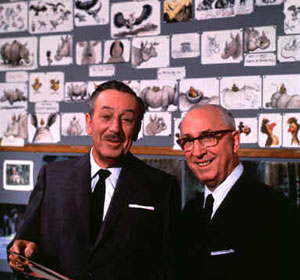
Foundations for the Disney Business

Disney entertainment speaks an international language that spans oceans, boundaries and cultural barriers. To people of all ages, everywhere around the world, the Disney name immediately communicates three things: Quality, Uniqueness and Value. And the Disney organization communicates a vivid understanding and relationship with its family audience, friendliness, and a dynamic inter-related diversity. Walt Disney's legacy for the future is far greater than the physical assets of our company. It involves a sacred public trust...an intangible that can't be bought at any price...an integrity that must be protected at any cost.
1. QUALITY

"When we consider a new project, we really study it - not just the surface idea, but everything about it. And when we go into the new project, we believe in it all the way. We have confidence in our ability to do it right. And we work hard to do the best possible job."
—Walt Disney

Today, the subject of Quality concerns itself with everything we do in the Disney organization. Disney is the only studio left in the world where a team of animators shun the gimmicks of cut-rate animation so prevalent elsewhere and adhere to the meticulous, painstaking, costly Disney approach to cartoons.

At Disneyland and Walt Disney World, extraordinary efforts are made on a daily basis to be the best by maintaining the quality of our show...guest service, food, merchandise and the thousand other factors which together make up a Disney theme experience.

Throughout the entire world-wide Disney organization, we try to do the best possible job with good taste in everything we do. To maintain these high standards, we monitor ourselves according to the toughest possible internal and external standards.
2. UNIQUENESS

"You hate to repeat yourself. I don't like to make sequels to my pictures. I like to take a new thing and develop something. There's really no secret about our approach. We keep moving forward, opening up new doors and doing new things, because we're curious... and curiosity keeps leading us down new paths. We're always exploring and experimenting."
—Walt Disney

Exploring, experimenting and pioneering. They were all a part of the Disney tradition of Uniqueness that began on "day one" in 1923. Walt took the medium of animation and gave it a voice, introduced color, added depth to the visual dimension with the multi-plane camera, and finally proved that if done with Disney quality it could even be expanded into full-length features. Never to be content with the status quo, however, he then expanded the audio dimension with the first stereophonic sound.

Dissatisfied with "run-down" amusement parks, he bet his entire organization on a new idea...a unique concept called Disneyland and revolutionized American outdoor entertainment. He brought his animated characters "to life" through an electronic pixie-dust called Audio-Animatronics®. He proved to a nation that color television programming was a viable means of entertainment. And he started to prove to the world that the problems of man could be solved by the technology of man...someone just needed to pull it together. And the project would be the most unique of all...Walt Disney World.

These are just the highlights of the remarkable list of unique accomplishments and projects generated throughout the Disney organization during its relatively young history.

And we have always protected that Uniqueness...protected every character we created from outside misuse and duplications. And we keep our product unique...we don't franchise Disneylands across the face of the earth although we've had ample opportunity. Uniqueness will always be Disney.
3. VALUE

"We're not out to make a fast dollar with gimmicks. We're interested in doing things that are fun - in bringing pleasure and especially laughter to people...it's proven it's a good business policy. Give the public everything you can give them..."
—Walt Disney

Throughout the organization, we always try to provide the best possible value to our public while maintaining reasonable profitability within good business sense. Like many other entertainment organizations often do, we could command far higher prices from our "captive audience" at our theme parks, or through our films which today practically have a monopoly in the "G" rated sector. However, there is an absolute Disney policy against "price-gouging." Our paying guests must feel that they have gotten their money's worth...they must feel that they have received good value. We want them to keep coming back...it's not a one-time shot. We want our guests telling their friends, "It was worth every cent." The greatest Disney advertisement strength is "word-of-mouth."

4. UNDERSTANDING THE DISNEY AUDIENCE

Disney entertainment is not aimed toward the intelligentsia. You can take all the PhD's and CPA's, all the philosophers, psychiatrists and psychologists and all the intellectuals and pseudo-intellectuals in the U.S. and together they wouldn't keep Walt Disney Productions in business for one week. The American families do. Everybody always said that Walt had some magical sixth sense for how something would be accepted by the public. Actually, he kept sight of who our public was. He said:

"Movie makers are often too introverted about their production. They tend to build up myths about audiences and to prattle glibly about shifting public taste and its unpredictables. In considering one thing: Americans are a sociable folk, we like to enjoy ourselves in crowds, at sports arenas, at picnics, fairs and carnivals, at concerts and at the theater."

"Above all, we like to laugh together - even at our own shortcomings. I don't like to kid myself about the intelligence and taste of audiences. They are made up of my neighbors, people I know and meet every day. Folks I trade with, go to church with, vote with, compete in business with, help build and preserve a nation with."
5. FRIENDLINESS

"Most of my life I have done what I wanted to do. I have had fun on the job. I have never been able to confine that fun to office hours."

—Walt Disney

Walt Disney Productions has been something of an anachronism in major industry by adhering to a first-name, open-door, informal code of behavior for its employees. And yet, these are the proven factors that lead directly to having fun on the job, maintaining a sense of humor and strong sense of internal friendliness. Ultimately, as Walt and Roy knew, it would lead to a strong external friendliness...a friendly efficiency with the public that would pay off in large dividends. No one can create the kind of friendly entertainment product we demand in a formal, unfriendly atmosphere. This important aspect of the Disney philosophy is universally recognized today by the public and press alike. The Wall Street Journal recently wrote that "You can see more respectful, courteous people in Disney World in an afternoon than in New York in a year."

6. THE DISNEY DYNAMIC: SYNERGETICS

"My greatest reward is that I've been able to build this wonderful organization."
—Walt Disney

Walt Disney developed the most diversified and synergetic organization the entertainment world has ever seen. Walt Disney Productions is actually what the conglomerates attempt to be...that is, where the whole is greater than the sum of the parts. This is because the Disney diversification is completely inter-related within our Disney product.

One sophisticated author writing for the Nation magazine as far back as 1967 put this diversification in excellent perspective, calling Disney a "ship of fantasy that is now a flotilla, all vessels controlled from a single port but each a separate identity and cargo. Until Disney, horizontal diversification was unknown in show business. In fact, it has a tighter logic than the fingers on one's hand. Disneyland advertises Disney movies and animal personalities. Disney TV plugs the park, where commercial exhibits by TV advertisers reduce overhead and raise profits. And the same golden symbiosis applies to publications, comic strips, toys and 2,000 other products."

Further, elaboration on the Disney synergetics and breaking it down even further, a long-time WED Imagineer said, "The individual things we do in Walt Disney World or Disneyland don't have to stand as separate profit entities like in other companies. We tell outsiders this and they think we're crazy, but that's the real secret to how it all works. We're looking for the total effect on the guest. That's the payoff. There's not a thing in either place that could be placed on the outside and stay in business. Not the Jungle Cruise...not the Liberty Tree Tavern...and not even our popcorn machines. But when you put it all together, and mix in the employees, the whole effect becomes something that creates the "Disney Experience."

"And frankly, you can apply that to our entire organization. Every Disney company and division draws strength from the other parts. It's a curious, in fact, a downright incredible phenomena." —Walt Disney
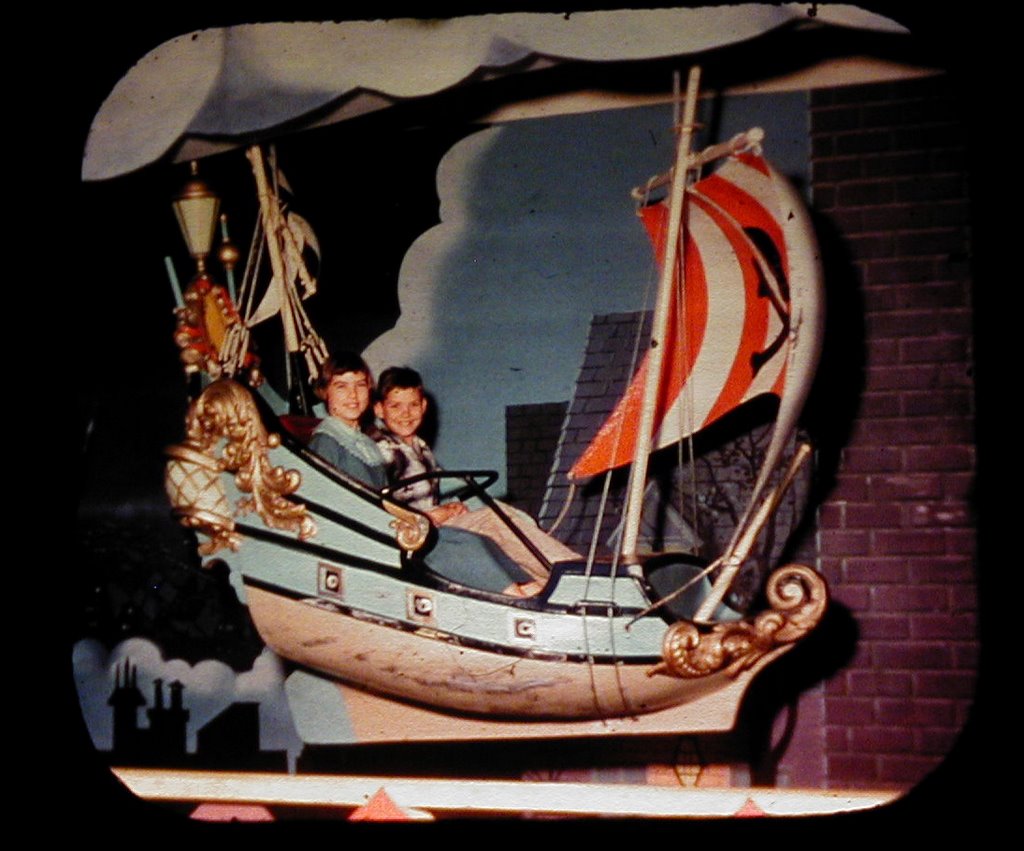
Uniqueness... Quality... Value... three vitally important aspects found throughout Disney entertainment. Understanding the Disney Audience...Friendliness...The Disney Dynamic of Synergetics...three vitally important aspects found throughout the Disney organization. All of these make up the basic foundation of our Disney business; producing "The Finest in Family Entertainment."

Friday, December 01, 2006

Japan, Morocco, FWAN?!


When did it all begin? When did the creative control Imagineering had enjoyed for years begin to get wrested away by the whims of its corporate overlords?

Some would venture that it all started when Michael Eisner signed off on the addition of two giant resort hotels to be located behind World Showcase at the tail end of the 1980s. Mr. Eisner, a champion of ostentatious and flamboyant displays of power and wealth, found a kindred spirit in architect Michael Graves and lauded the grandiloquent statement his work consistently made. So impressed was Mr. Eisner, infact, that Mr. Graves became the master architect for the Disney Studios corporate headquarters in Burbank, a leaden vault of a building more kin to the Bank of London or an Egyptian tomb, the enormous sculpts of the seven dwarves holding up the roof now cast as foreboding all powerful ogres.


The work of Michael Graves is many things- bold, dynamic, utilitarian, decorative, innovative.

One thing it’s not, however, is very Disney.

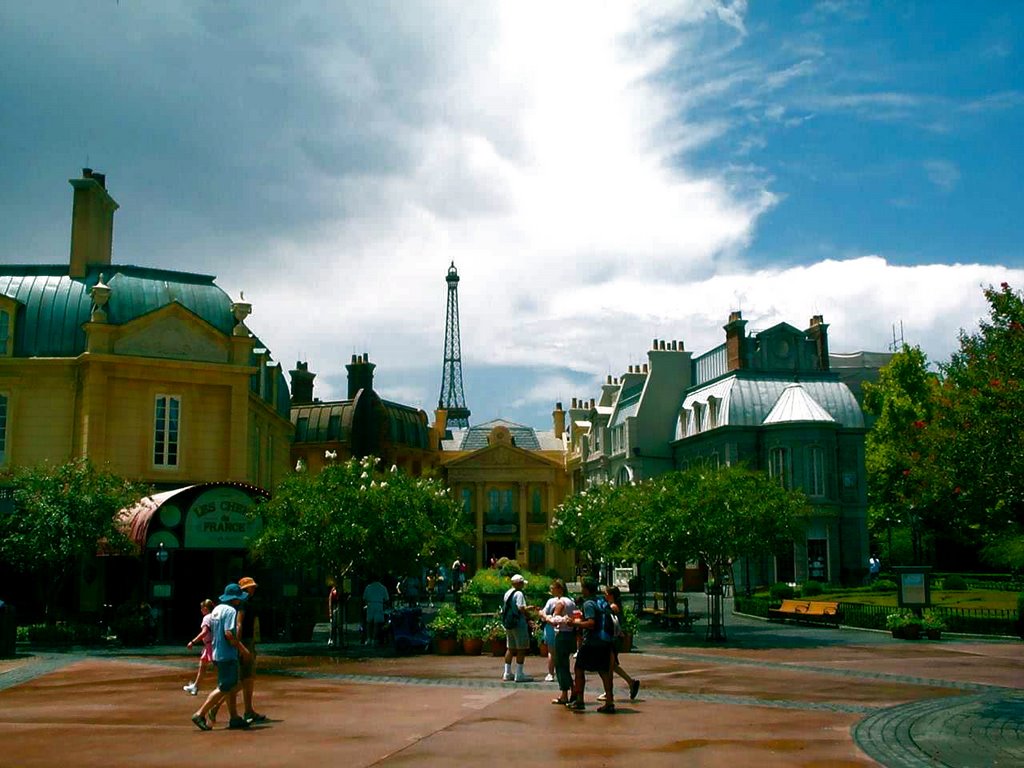
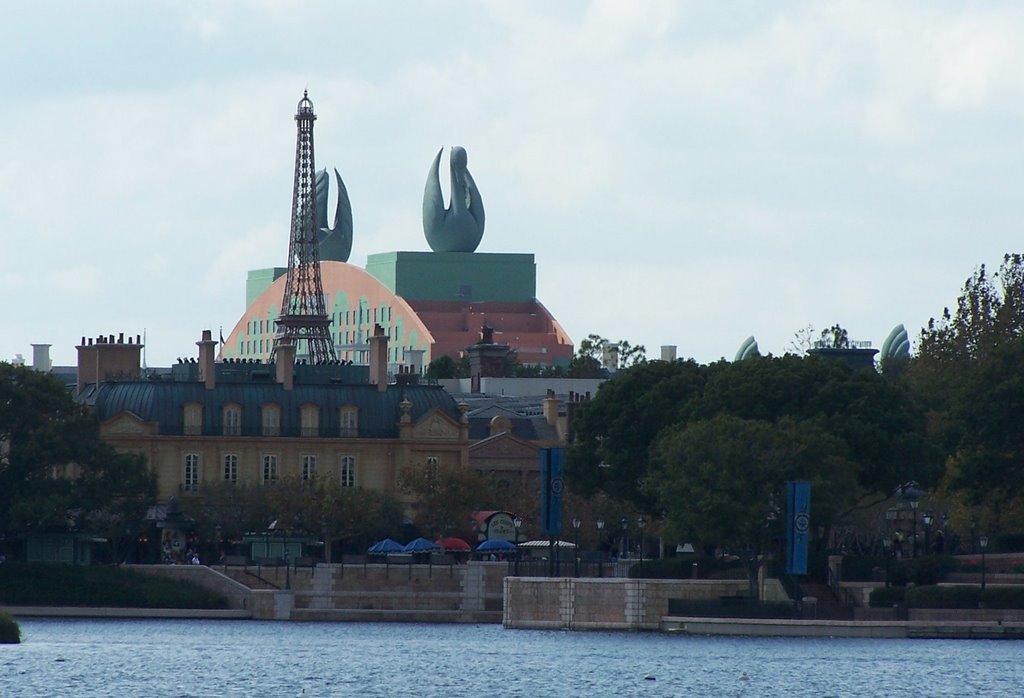
It wasn’t merely the fact that The Dolphin and The Swan were antithetical to the architecture of reassurance the Disney Company pioneered in the 50’s and 60’s that troubled Imagineers however; certainly Michael Grave’s work had enough whimsy, grandeur and innovation to land a spot somewhere on Disney Property. What really concerned Imagineers was exactly where the Dolphin and Swan were to be located.

One needn't have been a rocket scientist to realize that once the miniatures of these Vegas style hotels (owned and operated by Tishman Hotel Corporation) were placed on the scale model of Epcot Center at WED’s Model Shop the sight lines behind World Showcase would be severely compromised.

It certainly wasn’t a secret that one of the reasons Epcot Center was built six miles away from The Magic Kingdom was so that these very sight lines, the silhouettes of the World Showcase pavilions playing against a clear sky, would be unadulterated.

Despite the grumbling of much of the Imagineering staff at the time, Eisner’s super-sized ego wasn’t going to budge so the 27 story Dolphin and 12 story Swan Hotels, their requisite gargantuan rooftop animal sculpts adding an additional 56 and 47 feet respectively, rose behind the more modest four stories of the French Pavilion.

From that point on the pristine outline of Disney's romantic recreation of the Eiffel Tower would forevermore be tarnished, an all the more heartbreaking development because senior creative management at WED knew well what was happening and were powerless to stop it.

It was the tail end of the 80’s, however, and Imagineers had reason to believe that this architectural anomaly was only a hiccup in the grand scheme of things. Certainly once it was clear how damaged the World Showcase skyline had become even the most out of touch executives at Disney Corporate would make sure it never happened again. And so Imagineers looked the other way.

Over the last 15 years, however, paying guests of Epcot’s World Showcase haven’t had that option.

Saturday, November 25, 2006

The Myth of Story


The entertainment industry seems a slippery business to Wall Street. It’s difficult to explain in words why one entertainment property succeeds while another fails. Communicating with Wall Street and other influential laymen may very well be the most difficult part of an Entertainment CEO’s job. How does one quantify intangibles? How does a CEO convince investors and the public that his or her company has the winning formula? For Michael Eisner in the mid-1980s, the solution included an easy-to-remember sound byte: “It’s all about story.”

These four words were sent out to all corners of the Disney empire like a royal decree. At Walt Disney Imagineering, the decree arrived at a pivotal moment in its history. The old guard (Walt’s guys and gals) were retiring and the new generation was stepping up. They were young and eager to make their mark. Like their counterparts in the motion picture industry, they were looking for a standard against which to judge new ideas--a litmus test for creative ideas. And it wouldn’t hurt if they could find a way to curry favor with their new boss in the process. The answer dropped right in their laps.

The phrase, “What’s the story?” became a ubiquitous part of the Imagineering lexicon. Nothing marked the transition from WED to Imagineering better than the arrival of the new dogma of story. Attraction concepts were killed for lacking it, careers were made for those who embraced it, and destroyed for those who denied it. Screenwriters were hired and visual artists were laid off (ironically, some of these artists would have been called “story artists” had they worked in animation). Imagineering was transformed and the message went out to the world. Every Imagineer who sat down for an on-camera interview repeated Eisner’s mantra, “it’s all about story.” Imagineers literally began to believe their own press as a sound byte (originally designed to simply differentiate Disneyland from Six Flags for laymen) became doctrine. New Imagineers, laymen themselves, were indoctrinated into this new culture of story and a revisionist history was born.

Some claim the story culture began long before the mid-1980s--that it started with Walt. This is hard to prove and still harder to disprove (statements made by different Walt-era Imagineers contradict each other). Certainly "Story" was Walt's most-repeated mantra for the success of animation and live-action films. But in the context of theme park attractions, this was not the case. It is undeniable that during the mid-1980s linear storytelling was embraced by Walt Disney Imagineering with an unbridled enthusiasm never seen in Walt’s day.

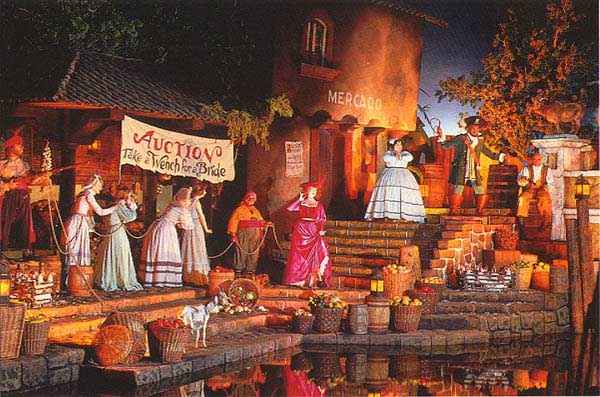
Think about some of the classic Disneyland attractions--Pirates of the Caribbean, Haunted Mansion, Matterhorn Bobsleds and “it’s a small world.” How would they fare against the story litmus test? Do they have a beginning, middle and end? A clear antagonist or protagonist? Would they be better if they had a clearly defined inciting incident, conflict and resolution? Without these things an attraction has no story, and therefore is no good--according to the current dogma.


So, has the injection of story in recent years improved the quality of theme park attractions? Well, sometimes. The immersive backstory created for the Twilight Zone Tower of Terror adds layers of depth to the experience--heightening the sense that the guests are visiting a real place with a real history. However, in Kilimanjaro Safaris at Disney’s Animal Kingdom, a tacked-on story about a baby elephant makes the experience seem less credible, more contrived and altogether artificial. It disrupts an otherwise beautiful and realistic experience.


Unfortunately, it seems that in recent years the trend has been toward story at the expense of all else. Simple easy-to-read sight gags like those found in Pirates of the Caribbean (three guys in jail with a bone and a little dog outside holding the keys) have given way to traditional three-act structure with an inciting incident, conflict and resolution. Complicated and overly talky premises dominate attractions such as “Honey, I Shrunk the Audience,” Journey Into Imagination (versions 2 and 3), Dinosaur, Sounds Dangerous, and Stitch’s Great Escape.

Spending time and money obsessing over how to communicate story details at the expense of creating a unique immersive experience may seem blatantly foolish, but that’s what comes from close adherence to an unquestionable dogma. Like any dogma, it exists to serve the ruling faction. If you consider the fact that a handful of “creative executives” at Imagineering have built their careers on the myth of story, it becomes apparent that the true audience for these carefully-crafted stories are not the millions of paying guests who visit Disney theme parks every year, but the executives who constantly ask, “What’s the story?”

Marc Davis’ quote at the top of the page (from “What Can You Learn From Disney’s Work,” Sales Meeting Magazine, July 1969) speaks of a series of experiences building to a climax--these are the trappings of story, as are setting, character, dialogue, action and reaction. Disney attractions have story elements, but they are not literal stories (it may seem like splitting hairs, but this is an important distinction). In other words, the story mantra is not wrong so much as it is imprecise. Failure to use precise language is not a crime, but deliberately manipulating language to suit a selfish political agenda is, at best, questionable. And anyone who suggests that Walt insisted on “story” as the central element to all of his attractions, is presenting a potentially damaging revisionist history.

The word ‘story’ like the word ‘art’ means something different to everyone and can not be used as a litmus test for creativity. Nothing can. Walt-era imagineers inherently understood how to entertain people. They understood the effects of story so well, they knew when not to use it. They were chosen by Walt personally because he recognized that they “got it.” No litmus test required. No artificial formula.

Just hire people who get it.

Tuesday, November 14, 2006

The Magic Door


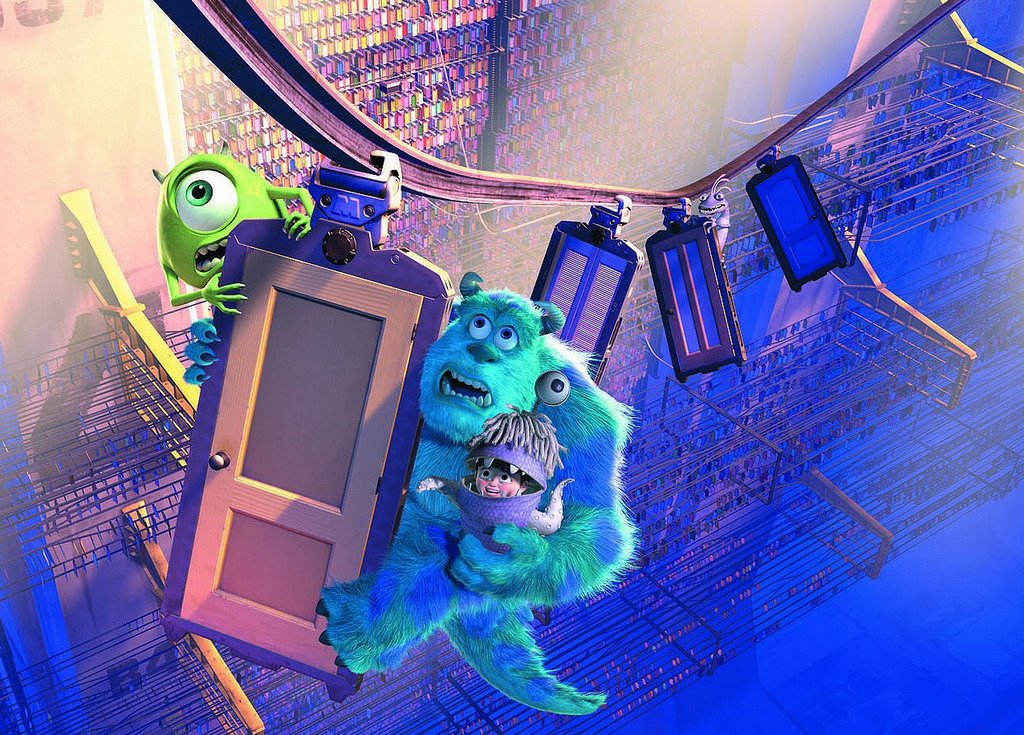
A central concept in Pixar’s hit “Monsters Inc.” is a magic door through which the workaday spooks of Monstropolis can travel to the human world to collect the screams of children.

These dimensional portals instantly captivate the imagination. What viewer does not come away from the film with a secret wish to step through such a door, to be instantly transported from one exotic location to another? And with a warehouse full of magic doors stored like dry cleaning on a moving/hanging conveyor, the possibilities for a personal journey through a raucous dimension-hopping Disneyland attraction are endless.

Like the plunge into Alice’s Wonderland rabbit hole or the leap from the Darling nursery into flight with Peter Pan, here is a truly visual and experiential story conceit, ready-made for Imagineers to exploit.

When California Adventure’s only dark ride, the shockingly ill-conceived “Superstar Limo” - - a bad acid-trip chase through the Touchstone Hollywood of cheesy B-celebrities (and Cher) - - was retrofitted as a “Monsters Inc.” ride, there was cause for celebration. Even on a limited budget and with a locked track layout, a C or D level dark ride through those magic portals couldn’t help but tickle the wishbone of our fancies. After all, it wasn’t the extravagant budgets of the old Fantasyland rides that made them favorites for 50 years, but their ability to convincingly transport the rider to Never-Never Lands of our imagination.

Yet, when the awkwardly titled “Monster’s Inc: Mike and Scully to the Rescue” attraction opened to the public, it was many things: cute, pleasant, mildly amusing, sure to charm the kiddies, a huge improvement over the prior tenant - - but, well, yet another dark ride disappointment that falls short of its promise.

Though we see magic doors, pass magic doors, even find a warehouse of magic doors, we are never taken THROUGH one single magic door.

During the ride, we are teased with, but never actually given the wish, the desire, the key experience. It’s foreplay without penetration. Monstropolis Interruptus.

(Well, there IS a colorfully painted plywood door on the exterior facade that “transports” us from the sidewalk to the queue, but this is somehow less than magical…).


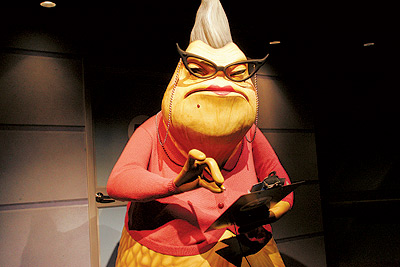
Rather than traveling through dimensional portals – an experience we are unlikely to have outside of Disneyland – we find ourselves stopping to “interact” with a cranky secretary robot spouting custom insults (already a daily annoyance for most of us in industrialized nations).

Like so many of the Disney dark rides of recent years; “The Many Adventures of Winnie-the-Pooh,” “Journey Into Imagination,” “Superstar Limo,” “Roger Rabbit’s Cartoon Spin,” “Buzz Lightyear’s Astro Blasters,” “The Great Movie Ride,” even the neo-classical “Splash Mountain” - - we are carted past stagey, episodic, distant set-pieces like tourists in a Disney Store wax museum.

We become mere passive spectators of a contrived scenario, burdened with more plot than necessary (“Help save Boo from blah, blah, blah…”). We are watching a mini-version of the film, not participating in it.

It’s a marked contrast to the original Fantasyland dark rides in which the guest was plunged into a first-person experience AS Snow White or Mr. Toad - - or the pinnacle 60’s triad of “Pirates of the Caribbean,” “The Haunted Mansion” and “Adventure Thru Inner Space,” which took voyagers on extravagant first-person journeys to fantastic other-realms of the historic, supernatural and psychedelic.

Walt wanted “Pirates” to make people feel like they were in the middle of a cocktail party, tuning in and out of the enveloping action. We were not passive-viewers at a modern amusement park, but part of a fantastic story come-to-life! The action is not confined to static sets on the right or left, but surrounds us in every way. We are lead in, on, over, under and through the story, not just past it.

This of-the-moment approach has proved to be far more durable and repeatable than the complex, episodic storylines and overwritten backstories of more recent creations. These elements seem to help the writers more than the riders.


Who cares what the dead bride’s silly maiden name might be - - why Boo is being kidnapped - - or why our vehicle is being hijacked? Talky exposition always hits the Omnimover like a lead balloon. When poorly written or staged, it can all-too-easily remind us that this is an artificial experience.

If the ride is so un-involving that I care to crick my neck trying to see the nostalgic remnants of a former, superior attraction - - or to spot kitschy design trivia - - there is a big problem. Do the storytellers really believe in the illusion at hand? If they don’t, we won’t.

Walt’s original Imagineers had all cut their teeth on that most completely visual of all filmmaking genres, the cartoon, and that experience clearly made a difference in their more elemental approach to theme park story. A simple situation with a visual/thematic progression and climax would suffice, much as it did for a cartoon short or a single sequence in an animated feature.

While cartoonists undoubtedly contributed gags and ideas to “Monsters, “Pooh,” or “Splash Mountain,” the overall product doesn’t feel much like it belongs to them, but more to a committee. Those show designers more experienced in technology, engineering, architecture, real-estate, marketing or theatre lack the same gift for immersion, non-verbal showmanship and elegant simplicity. Their priorities lie elsewhere.

It’s not obtuse theme park logistics and theory that matter to guests, but a transcendent emotional and visceral payoff. Those early Imagineers seemed to know instinctively what part of the story a rider wanted or needed to experience - - whether that concept was derived from a film or an entirely original situation. They could convincingly visualize themselves into the role of protagonist on an epic adventure. And we would follow them gladly.


As one wag put it, “Watch Alice go down the hole… or go down the hole? I just can’t decide.”

The magic for Disneyland guests was always the ability to travel THROUGH dimensional doorways to other worlds.

Disneyland needs more Magic Doors and fewer Hidden Mickeys.

Friday, November 10, 2006

The Sacred and the Profane


One of the most revolutionary aspects of Walt’s breakthrough park in Anaheim was its attention to comforting visual transitions from one disparate themed area to another. As guests moved from the Victorian gingerbread of Main Street to a time worn Bazaar on the edge of a distant jungle the connecting rooftops, fencing and plantings gradually transformed. The goal for the early Disneyland designers was to never jar the guests eye as they moved from one ‘story’ to another; the concept much like a cross dissolve between scenes in motion pictures.

This uncanny attention to visual harmony became a cornerstone philosophy in the design and execution of Disney’s theme parks for years to come, not only serving to keep guests in the park for an entire day but assuring they'd come back for more year after year.

Once the Accountaneers stormed the castle, however, not only did the clever visual transitions between fully realized worlds bite the dust but the very worlds themselves did as well.


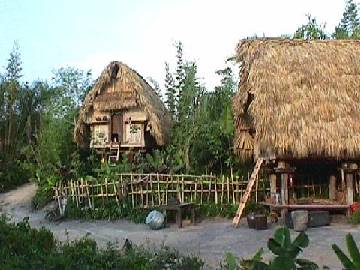
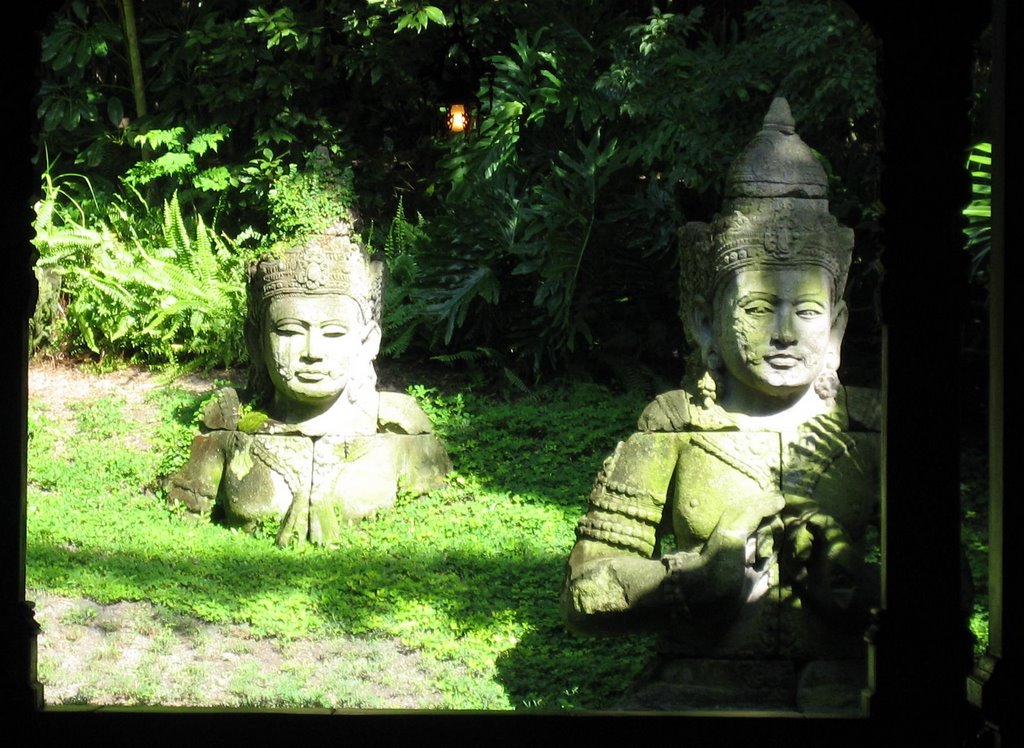
Nowhere is this tragic reversal of fortune more apparent than at Disney’s Animal Kingdom in Orlando. Most of the theming here is of the highest caliber, often surpassing even the best efforts of the finest Walt era Imagineers. Joe Rohde and his team have created beautiful worlds within worlds that verge on spiritual epiphanies. From the eye-popping authenticity of a meticulously recreated African or Asian village to the intimate beauty of the Pangani Forest and Maharajah Jungle trails this is a park that deepy understands the worlds its creating, wrapping the guests not only within a convincing environment but within a distinct feeling.


But then there’s Dinoland U.S.A., specifically ‘Chester and Hester’s’ Dino-Rama’, an area so sharply out of step with the rest of the park that it borders on blasphemy. Stumbling upon this loud kiddy playground after a peaceful stroll around the wondrous Tree of Life is like tripping into a pool of vomit after leaving St. Peter’s Basilica.


Blaring, vigorously repellent, patronizing, cheap and visually offensive, this carny hell-hole appears to have taken its theme from traveling fun-fairs; the kind that are quickly loaded and unloaded from the back of U-Haul trucks. One can only imagine that this addition was bourn from the spreadsheets of some Strategic Planning MBA who figured the kiddy quotient wasn’t getting it’s full share of yuks from a park that appeared to skew too ‘adult’, Walt’s admonition to entertain adults and children together long forgotten.


Though Dino-Rama might elicit pained smiles in Peoria, it severely cheapens Disney’s Animal Kingdom; a park that, at its best, reminds guests once again what the ‘theme’ in theme parks really means. That it appears in any Disney park is sin enough, but the fact that it’s butted up against some of Imagineering’s most sublime work in recent years is deeply heartbreaking.

Saturday, October 21, 2006

Taking a Seat


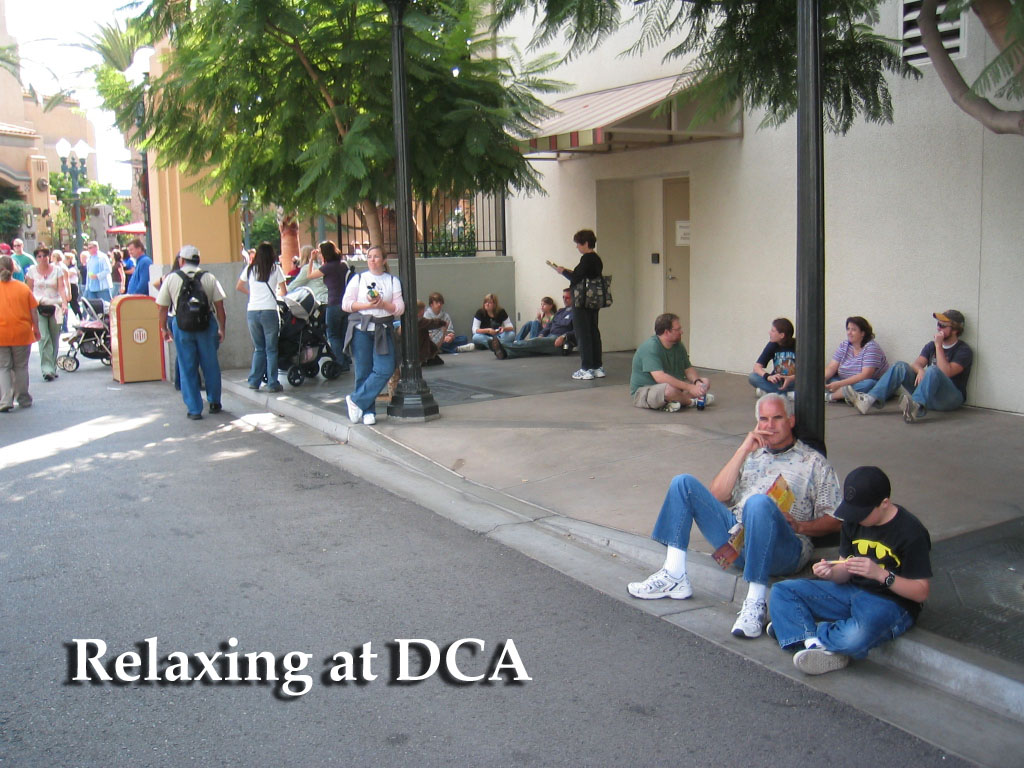
When Roy E. Disney accused the Eisner regime of building Disney's California Adventure "on the cheap" it was very clear what he was talking about. Here was a park filled with off the shelf amusements contracted out to less than stellar vendors, no distinct themed areas and nary a penny spent on new show technology, save perhaps Soaring Over California's remarkable hovering benchseats.

But what the park's few guests may not realize is that the 'cheap' across the street from Disneyland went far deeper than Wal-Mart style thrills, mall esthetics and empty sightlines. When it came to the comfort of patrons, DCA proudly demoted the guests to third world refugees by not fully budgeting for one of the most rudimentary of theme park provisions: Outdoor seating.

We all know what happens to guests non-plussed by their stroll along Paradise Pier. They leave and never come back. But what about the few remaining souls who haven't yet given up the faith? What happens when, after searching vainly for any element of charm in the park, guests now need a quiet place to rest their weary feet?


It appears that when it comes to taking a break from your glorious California Adventure Disney would rather you please remain standing.

Wednesday, October 11, 2006

Positive Signs


A baby step forward is still progress, no matter how small.

Whether it was due to Exxon's sponsorship pull-out of Epcot's Universe of Energy or an astute management decision from someone at Disney with taste, the aggressively ugly marquee that sat beside the pavilion is now history. No longer will guests be barraged by over-zealous splashes of mauve, crowded visual elements, pop-icon mugging, covert explosions of pink triangles, incongruous type fonts and golden dinosaurs all randomly glued to a cheap milk crate backing. This was a visual eyesore so discomforting it didn't belong at a Six Flags park, let alone Epcot Center's classy Future World.

On the other side of the country the final retro touches have been affixed to the once equally ugly Club Buzz at Disneyland's Tomorrowland. Also back is the original name for the area, The Tomorrowland Terrace. A lone designer at Disneyland's Entertainment Division saw fit to pay homage to the timeless design sensibility of Disney's legendary Imagineer Rolly Crump and his original modernist motif for this unique rising bandstand. Though not an exact re-fit of Rolly's whimsical airy space-age planters, it's a genuine and heartfelt nod to his take on a promising optimistic future. Club Buzz, on the other hand, was a heavy, brooding, dystopian monolith that sucked all the life out of the area.


Those that value great design and a quality guest experience right down to the smallest detail have reason to rejoice at these recent, albeit minor, changes. Progress at a snail's pace is still better than decay and destruction at any pace.

Thursday, October 05, 2006

The Irrelevance of Mark Twain's Tom Sawyer


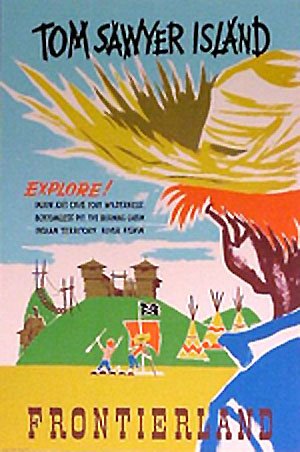
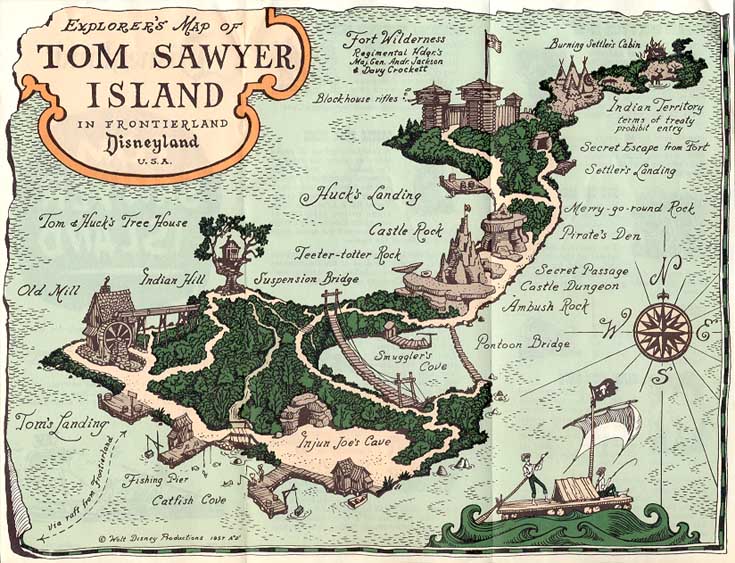
Yes it's true. Jay Rasulo and the marketing minions at Disney Corporate are pushing hard for a rushed tear-down of Tom Sawyer's Island to make room for a Jack Sparrow themed Pirate Playground in May of 2007.

Those within the Orwellian confines of W.D.I. now tasked with shape-shifting this classic Walt inspired island of adventure and brave enough to talk about it generally don't agree with their new mandate. Driven hard by the movie's financial success, this is a decision that is both knee-jerk and wrong.

The argument that is being used is that the Island is no longer being attended, so W.D.I. must make it "relevant".

Just when did attendance drop? Was it when the fort shut and locked its entrance gate? When the bridges were temporarily run down and closed? When the allure of a burning cabin was shut off? When water traffic backed off with the loss of the Keel Boats and slimmed down Canoes? When the designated "smoking area" for that region was moved to the load/unload of the rafts?

So now what? Collective wisdom at Imagineering is that the disease has been mis-diagnosed. But no one in upper management seems to care about the legacy of Disneyland anymore. It's old fashioned, and long-term apparently does not appeal to Wallstreet.

Okay, so Disneyland is not a museum. Still, some things are just fun!

But only when they are working the way they had been designed to.

Tuesday, September 26, 2006

Walking in Walt's Footsteps


John Hench often talked about Walt's desires for his staff of Imagineers at W.E.D. to visit the Park often.

"You guys get down there at least twice a month. For God's sake, don't eat off the lot. Stay there... lunch with the guests... talk to them."
Why would Walt Disney suggest such a thing? The answer is of course very simple. Walt understood that the only way to discover what works and what does not work is to experience it for yourself. You must have a personal emotional response in order to progress with any sincerity. Think of the potential strength of your creative work force when they have been educated by their own product. Walt thought about that very thing.

How often have you experienced great joy at a Disney theme park? Was it your Jungle Cruise Skipper with his impeccable comedic timing? Was it seeing the family of ducks that crossed the parade path over to the StorybookLand canal for a swim? Was it the smell of fresh buttered popcorn? Now, do you personally feel qualified to tell your family, friends and/or peers about all of these things?

Of course you do.


How often have you experienced disappointment at a Disney theme park? Was it a crowd control Cast Member who was rude because you did not know which way to traverse Main Street in the evening? Was the restaurant you were anticipating the most closed early or not open at all? Was the restroom you went in to unclean, with a mysterious wet floor? Again, do you feel personally qualified to tell your family, friends and/or peers about those same things?

Yes. In fact, you become the most qualified, just for having been there.


But, what if the extent of your theme park visit was a piece of paper handed to you some 40 miles away? The contents therein being such information as- 37% of the clicks through the turnstiles may not have experienced Space Mountain today due to periodic attraction closures? This same paper also tells you that churro sales are up 5% from the same peak Saturday a year ago. What is your emotional reaction to that information? How interested are you in making sincere attempts to resolve any negatives in such reports? How damaging is it for a person who is in a position of decision or influence to only see the theme park guests as numbers or percentages on a spreadsheet?

Walt knew what he was saying when he would stress the importance of going to the Park. He knew, because he was there as a guest.

Frequently.


Strike Up The Band!


Let the drums roll out! Let the trumpets call! Let the people sing! Strike up the band!

It may be appear to be an insignificant trifle in the great corporate universe of the Disney Company, but the re-installation of a classic Disneyland detail gives all those who care about good taste, timeless design and the heritage of Walt's classic theme park reason to rejoice.

Rolly Crump's fanciful space-age planters that festooned the original Tommowland Terrace bandshell appear to be making a return. For three decades this classic Disneyland icon never lost its design appeal or its ability to transport guests to a groovy sleek and optimistic world of tomorrow. When Rolly's imaginative ornamentation disappeared with the installation of Club Buzz, a heavy-handed, grim and aggressively unappealing redressing of the stage in 1998, Disneyland not only lost a peice of great design from an accomplished artist but it lost a bit of its heritage as well.


But somewhere, somehow, someone at Disneyland's Entertainment Division is fighting the good fight. To those who reinstated this glorious Disneyland gem, bravo to one and all.

May this be the beginning of a great big beautiful tomorrow.


Monday, September 18, 2006

Thursday, September 14, 2006

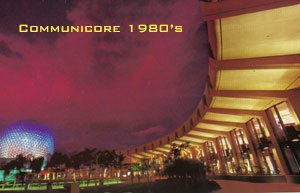
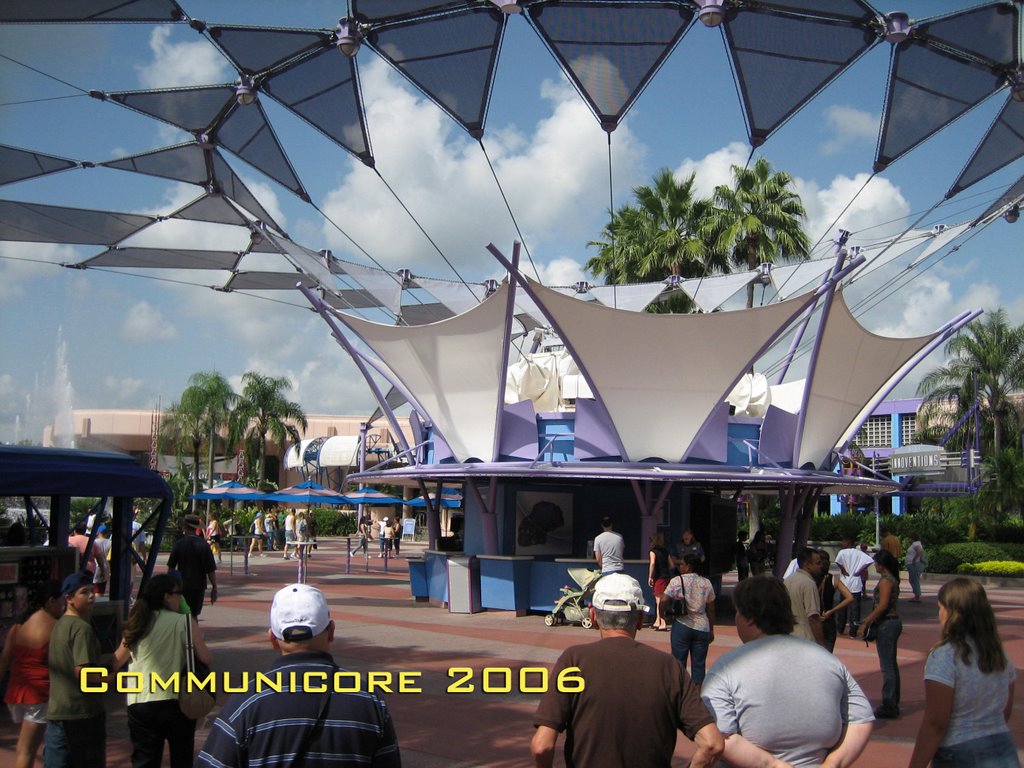
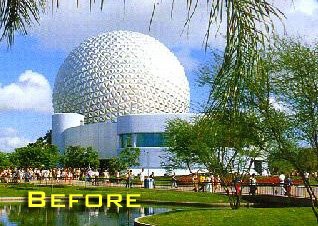
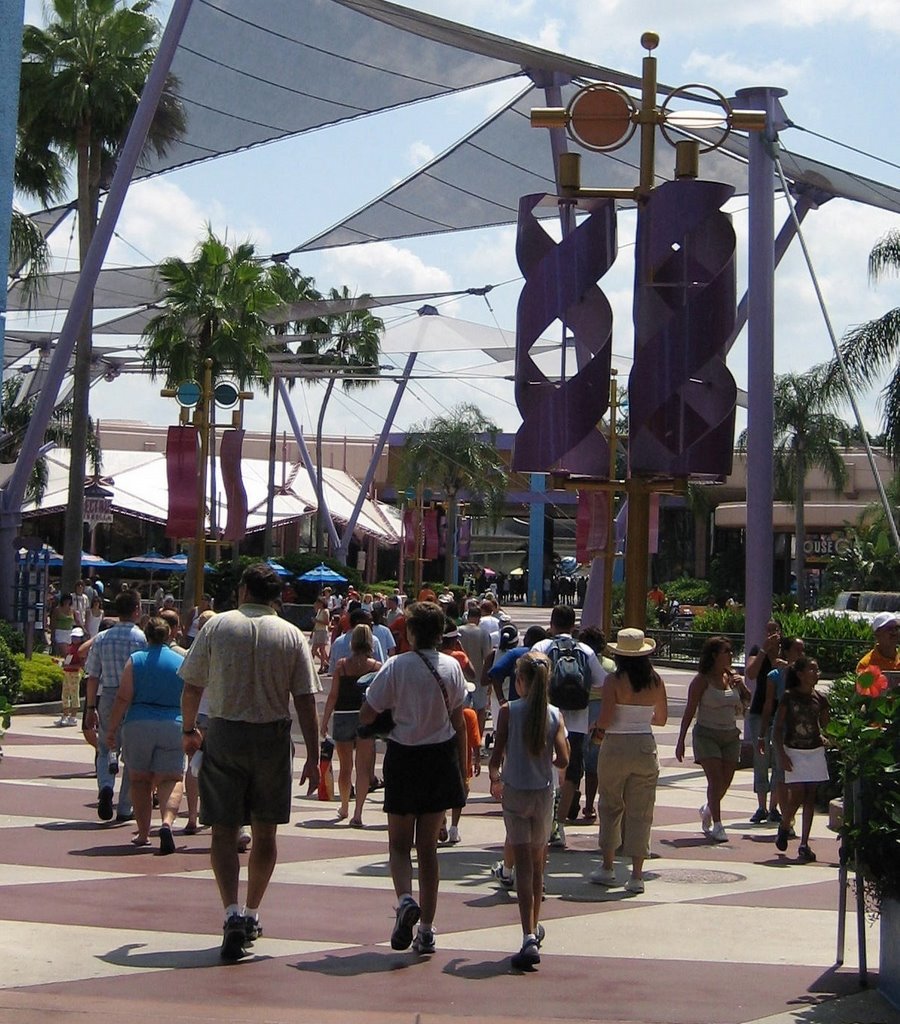
Communi-clutter


Words can’t begin to truly describe the mess that has befallen Epcot’s Communicore. Infact, weeks have passed and still this writer struggles to find the perfect analogy, the sterling turn of phrase, the precise metaphor to summarize the visual nightmare this once comforting futuristic landscape has become.

The clean spartan lines are gone now; the simple visual statement completely covered over in designer excreta. Where less was much more, now more apparently isn’t more enough. Where the original Imagineers worked overtime to create a visually pleasing forward thinking urban environment, later embellishers, well schooled in the art of ugly, spared no expense in making a mockery of Communicore’s once pure and reassuring architectural statement.


Giant metal poles, tightly affixed with metal bolts, painted in garish grunge-mall mauve now spear the landscape. Twine and sharp edged tarps splay out over the area like malevolent fish nets descending for the catch. Add to that endless metal doo dads and twirly gigs, spinning whozits and whatzits, towering kiosks and assaultive souvenir pushcarts, billowing tents and oversized umbrellas. And all of it stirred up with a healthy helping of cheap.

The gentle sensuous lines of Communicore East and West are barely discernable now; the grand vision suffocated by the very worst in bad taste.

Shame on the perpertrators.

Shame.